Translate

Sunday, April 22, 2018

Welcome to Food World Building Part 2: Of Humans and Plants

Happy Earth Day!

Spring seems to have finally shown up in my area. Trees are in bloom, robins are bouncing about, and hikers are soaking up the sun. We’ve had such weird weather lately that the plants around here don’t seem to know what to do.

Pick a season!
It does worry me though. March and April are usually the first months to start planting crops. The odd weather could cause problems for the growing season in my area.

Thankfully, my area isn’t completely dependent on the local farmers (though I highly recommend you support your local farmer). We’re able to import food from all over the world. I can get cheese from New Zealand, avocados from Mexico, and tea from India.

Crop failure is still something that can happen. The many people during the Great Depression of the 1930s were hit even harder when a dust bowl struck the main area of the United States where wheat is grown. A lot of people had to relocate because they could no longer feed themselves nor their families.

There are many reasons crops might fail. Locust swarms, volcanic eruptions, wild fires, droughts, floods, and erosion can all contribute to the loss of food sources. Many ancient civilizations built their culture around agriculture and blamed angry gods for the natural disasters that could destroy their crops. Demeter, Freyr, and Xipe Totec are examples of gods and goddesses who presided over agriculture or relate to the changing seasons.

Today, crop failure isn’t as likely as it once was in the United States, but that doesn’t mean that natural disasters and climate change don’t still pose a threat, though they aren’t caused by angry gods. There are still places where crop failure does happen and to devistating effects on the people in the area. Scientists have worked tirelessly to monitor these places that are most affected by disasters and climate change. Pesticides and even modifying plant genetics have been used to help prevent loss of crops.

Genetically modifying our food isn’t exactly a new practice.

When I was still in college, I took a class on agriculture and how it has evolved over time. There was an entire section on how humans have been selectively modifying our food science the beginning of agricultural practice. Evidence suggests that tomato plants were once very tiny, about the size of peas, but because humans liked having larger fruit to eat, evolved to become much larger. Corn has a green husk wrapped around its seeds. This doesn’t really benefit the plant as it needs the wind to spread the seeds to create the next generation, but it does benefit humans trying to keep birds and insects away from a staple food source.

This isn’t to say that I necessary agree with all modern practices surrounding genetically modified food. There’s a lot of controversy that I don’t want to get into, but I don’t think it’s a bad thing if scientists are able to help create a nutritious sweet potato that also doesn’t require a lot of water to grow, especially in areas prone to droughts. But the belief that the food we eat has always looked or tasted the way we think it does today, isn’t accurate.

Humans learned to cultivate plants through trial and error. Some plants that were once poisonous to us, such as almonds and apples, have become edible. We figured out how to irrigate crops even if it doesn’t rain everyday.

Apples were a later addition to the human diet.

So, if you are doing some world building in fantasy, science fiction, or historical fiction, don’t forget to include some information about the plant life. Which crops are staples of the culture’s diet? It’s usually some type of grain or starch like rice, wheat, corn, or potatoes. Are there any plants people have superstitions about? Does the culture have a god or goddess they worship specifically for agriculture or the changing seasons? Was there once a great disaster that caused major crop failure and led to a mass migration?

It might not seem that important, but small touches like that can really bring a fictional world to life. After all, much of human civilization centers around agriculture and our relationship with the plants that we eat. It’s fascinating how much we rely on plants for our society to function.

I hope you all were able to go outside and spend some time in nature today. Earth Day helps me remember that I’m thankful for the planet we live on and the wonders I find here. Please go out if you can and enjoy what our world has to offer.

If you enjoyed this post (or it really pissed you off), please like, share, and/or leave a comment. I love hearing from my readers and I hope y’all like hearing from me.

Until next week.

Sunday, April 15, 2018

Welcome to Food World Building Part 1: An Introduction

When I started writing this, I honestly thought that it would be one post. Then it started to get longer and longer. I quickly realized there were a lot more topics I wanted to talk about and things I wanted to expand on. So, here's to my latest blog series, food.

I haven't recently talked about food on this blog. Probably because I have another blog where I can talk endlessly about my latest kitchen experiment (click here to see Cooking with Spirits - updates Mondays at 13:00).

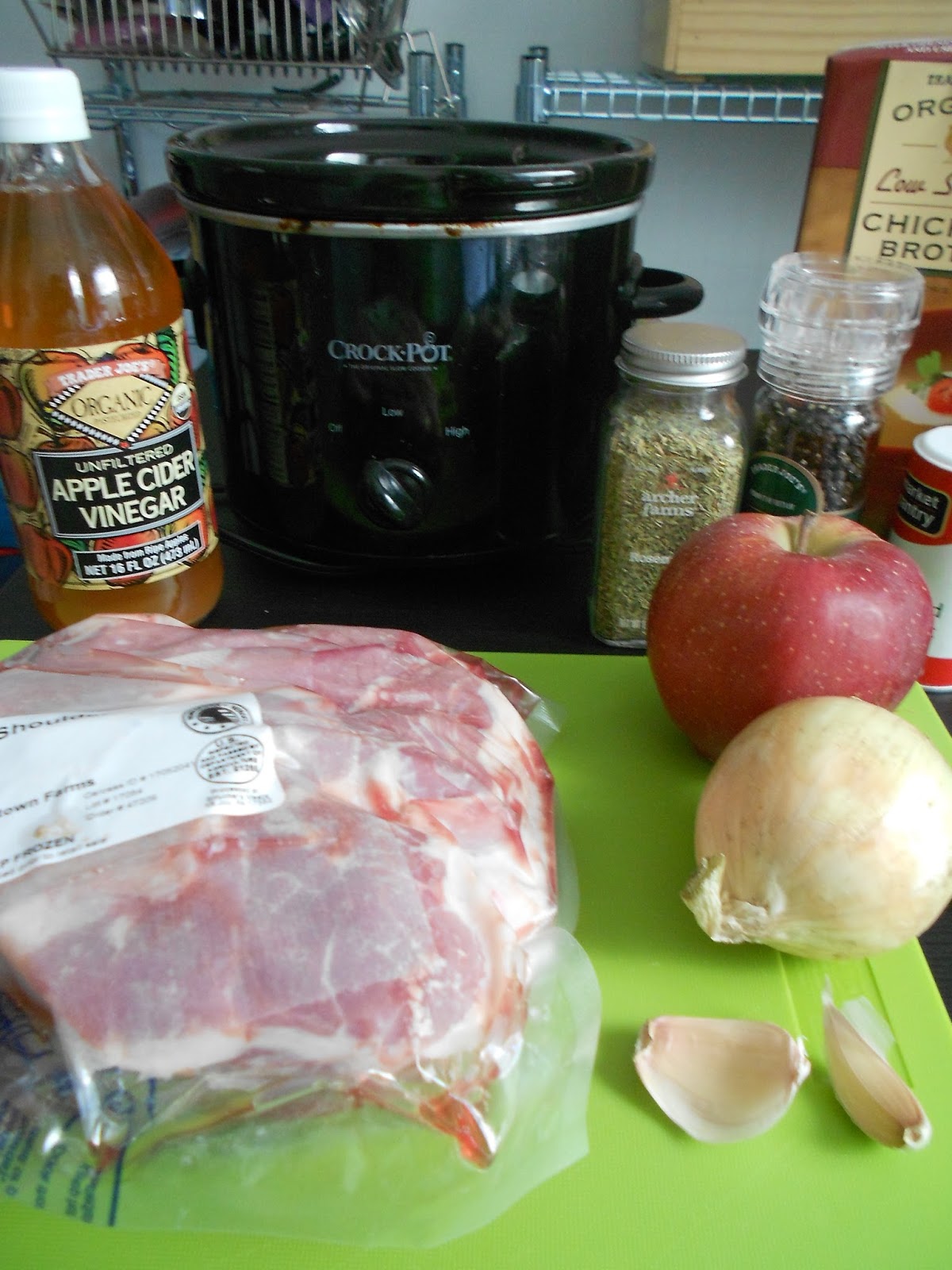
Crock pots for the win!
We all have some type of relationship with food. The act of eating give us the energy we need to live. Food gives us the nutrients to live healthy lives. The kinds of foods we eat often help to identify our cultural background. Experimenting with different recipes shows our creative and adventurous side (especially if it involves whatever I find at the back of my pantry).

Food has a big social impact on our lives. It's recommended that families sit down and eat dinner together to help with child development. Friends go out for lunch to catch up with each other. A romantic date likely starts off with a fancy dinner. Parents pass down family recipes to their children.

There are entire industries built around food. There are dozens of cooking shows and at least two networks I know of in the US that are totally dedicated to food. Celebrity chiefs have created empires around their cooking. There are travel shows dedicated to showing off a new city or country's best places or most unusual places to find a bite to eat.

Many communities have distinct foods that they identify with.

Roasted marshmallows - a summer time staple
The United States has a lot of these subcultures entirely based around food, occasionally leading to food wars. New Jersey, New York, and Chicago all claim to have the best pizza. The city of Chicago once sent the comedian Jon Stewart a Chicago Deep Dish Pizza after he insulted it on his show to prove that their pizza was truly the best. The southern part of the United States will never agree on who has the best BBQ. An argument that I won't touch with a ten foot pole (but I'm partial to Eastern North Carolina's style). And Old Bay seasoning and blue crabs is probably it's own food group in Maryland.

Food is also how we connect with cultural heritage. In many cities in the US you'll find a Little Italy, Chinatown, or Latin Quarter. These neighborhoods were where newly arrived immigrants from one country could live and be close to other people who were from the same country. People brought their favorite foods with them and would open restaurants.

I grew up eating a lot of different types of food. Between my family and my friends' parents, there were tons of home cooked dishes I got to try from many different cultures. I had friends whose mother's cook make samosas from scratch. I grew up eating a lot of traditional Japanese and Guyanese food (that I rarely find in restaurants). And I swear that nothing beats my mom's goulash or her homemade humus and tabbouleh.

One of the strangest back handed compliments I ever received was that I grew up eating "a lot of weird food". The person I was with claimed to have grown up eating "normal food"- whatever that means. Needless to say that relationship didn't last. As far as I'm concerned, there's no such thing as "normal food". There's just food.

So it stands to reason that with food being such an important part of everyone's culture, it would be easy to write about. Right?

Well, sort of. Much like portraying food visually is an art (one that usually involves a lot of fake food), writing about food can be equally challenging. There are only so many times I can write the word delicious in my blog and not think I'm just being overly dramatic about my own cooking.

There's an entire vocabulary around food, one that is as vast and rich as any delicacy.

Not only does a writer have to think about the vocabulary, but the culture surrounding that food. What kind of food does a dessert community have that would be very different than a community on a tropical island? What goes into preserving food when there isn't a fridge to be found? There's a lot of research that needs to go into writing about food.

As this introduction has concluded: FOOD IS IMPORTANT.

If you enjoyed this post (or it really pissed you off) please like, share, and/or leave a comment. I love hearing from my readers and I hope you guys like hearing from me.

Sunday, April 8, 2018

Welcome to Creative Burn Out

I've been staring at this blank page for about ten minutes. Ten minutes of me trying to figure out what I want to write in this week's blog. As I write these words, I still haven't decided what my topic is. The title is blank. My mind is blank.

At least there are now words on the page.

Writing when I'm creatively drained is a nightmare. I have so many stories and ideas buzzing around my head, yet when I sit down to put words on the page, there's nothing.

It's frustrating.

How do muggles banish dementors?
I want to write. I want to create. But there's this terrible disconnect between my imagination and reality.

There's also a bit of fear. I'm scared that instead of expressing myself in a constructive way, I'm just ranting or whining. My blog is a public space and anyone can read it. It can reflect who I am as a person.

Writing is hard.

Occasionally I'll throw random words on a page and try to connect them, like playing with those fridge magnets to form silly sentences. But that doesn't mean what I've written is any good. I've created lots of "crap" over the years.

Last week, I wrote about the art of failure and how I'm scared to fail. A few weeks before that, I wrote about my love of destruction and how it can lead to creation. One post was a lot better than the other and I wish I could replicate that success 100% of the time.

But if I've learned from my art, some things can't be recreated.
Except I can't. Even as I write this post, I've come to realize that I don't know what I want to say. So far these words feel more like a stream of consciousness than one of my actual blog posts (at least I'm not including every thought that's crossing my mind, that would be really annoying).

I've been struggling to find inspiration. I've worked on my melted crayon and acrylic paintings. I've written a poem for each day so far in April. I've gone hiking and worked out at the gym.

Maybe I'm burnt out.

Creative burn out isn't something I've ever really dealt with before. It usually comes so naturally to me. It's a great distraction from all the other stress I'm under.

Except now it's not.

Until next week...if I'm not still burnt out.

If you enjoyed this post (or it really pissed you off), please like, share, and/or leave a comment. I love hearing from my readers and I hope you guys like hearing from me.

Sunday, April 1, 2018

Welcome to the Art of Failure

Failure is scary.

Failure is bad.

Failure is not an option.

All things I have said to myself, but not everyone has that attitude towards failure.

"I have not failed. I've just found 10,000 ways that won't work." - Thomas Edison

I have a fear of failure. I fear feeling like a failure. I fear seeing my failure. I fear not living up to my potential.

Our society has a love-hate relationship with failure. I have a love-hate relationship with failure.

On the one hand, I remember growing up in schools that emphasized the importance of excellence and achievement. Failing meant that I were falling behind, my grade point average was going to suffer, and I wasn't meeting expectations. I felt a lot of shame if I thought I was failing.

On the other, failure meant I found a way that didn't work or that I needed help or a new way of looking at a problem. Failure teaches acceptance and is a great motivator to try again. Learning how to handle failure at an early age helped with emotional maturity later in life.

Thomas Edison still failed 10,000 times while inventing the light bulb. He's just really good at dressing up that failure with different words that don't sound as negative.

I've been trying to sell my short stories and poetry lately. I haven't sold any yet and at times all of the rejections can get discouraging, but I keep trying. I want other people to enjoy reading what I write as much as I enjoy writing it.

But is success selling my work? Or is the act of writing success itself?

I don't know.

Measuring success now isn't the same as measuring success in school. Things are a lot more subjective and answers aren't necessarily right or wrong. I might have succeeded in one area and still feel like a failure in another.

I'm scared to fail, but that doesn't mean I shouldn't keep trying new things.

Short poem and art work...
This month I am challenging myself to write and post (on Twitter and/or Instagram) a poem each day in the month of April. For those of you who don't know, April is National Poetry Month. It's a personal challenge that doesn't cost me anything. The poems might not be the best or the most polished, but that's not the point.

And if I fail to write a poem for social media daily, oh well. I'll just have to try again next year.

If you enjoyed this post (or if it really pissed you off) please like, share, and/or leave a comment. I love hearing from my readers and I hope you guys like hearing from me. Until next week!

Sunday, March 18, 2018

Welcome to Creative Blocks

Last week I wrote about the beauty I find in destruction. Part of that beauty also lies in what is created by that destruction. A few years after a forest fire, new life starts to grow. When a volcano erupts in the ocean a new island is formed. As I melt crayons, a beautiful picture forms.

Then there are the days where I'm stuck staring at a blank page or canvas. Trying desperately to fill it with...something.

I'm often given the advice to "write everyday" no matter what. I don't find it to be practical. For one thing, I'm very busy and trying to find time to sit down and write on my laptop everyday is tedious. For another, some days there's just nothing there for me to write down. It's like my mind has gone blank and there just aren't words.

It's frustrating. It's challenging. I feel like I've lost part of myself.

Finally, there are the days where I'm so full of s words that I can't think straight. My mind is a buzz with what I want to create. What do I focus on? What should be created first?

I'm slowly learning different techniques to help with these creative blocks. I've had varying rates of success with the techniques I've tried and others I have only just recently been introduced to.

1) Exercise - I'm a very active person. Going to the gym or for a hike helps me burn off all of my extra energy that would otherwise have me bouncing off the walls. If I need a break at work, I run up and down the stairs until I can sit still again. Yoga is another form of exercise that I love doing when I need to center myself. It's precise and requires discipline to match the movements in the right positions to my breathing.

2) Meditation - Much like yoga, meditation requires focus and discipline. Breathing is essential to meditative practice. I usually couple my meditation with yoga and feel invigorated by my practice.


3) Getting in touch with nature - If I have the time and it's not too hot, I like to go hiking on the weekends. I typically go to an area that is well populated or join a Meet Up group hike. I find that getting in touch with nature helps me center myself mentally and creatively. The air is clean and smells fresh. The sounds of the city and suburbs melt away. All I hear is the rush of water and away of trees. I also usually run into a lot of people walking their dogs and am allowed to pet the doggies. Note: I do not recommend hiking alone or in a secluded area. On my last hike with a Meet Up group we came across a mama bear and her cub. It was terrifying in a group, it could end tragically if you're alone.


4) Art - Melted crayon art and acrylic painting has given me a new creative outlet that has inspired me to write new poetry. I started keeping a sketchbook in high school that I used to create characters, settings, or abstract concepts. Occasionally the art I create goes with a specific writing piece.


5) Word Art - Along the same vain as regular art, word art is a subset that I enjoy using for brainstorming. There are a couple of ways that I create word art. The first I started doing is by choosing a word and then sketch the word with different images that I associate with the word. Another is by writing poetry or prose in the form of a picture.

6) Listen to music - Many of the writer's I follow or have met spoke about how they use music to help them write. One writer talked about how she listens to one song over and over while writing a book. By the time they had finished writing, they could never listen to that song again. I tend to listen to music to help me set the mood for my writing, but sometimes I get so distracted that I start dancing and forget to actually write.

7) Tarot cards - I haven't tried this technique yet, but earlier today I was introduced to using tarot to help write a story. It sounds like a great technique. If you're curious, here's a YouTube video for you to check out.

8) Keeping a journal - I love keeping a journal. It helps me organize my thoughts and work out what I am feeling. Some journals had nonsensical poetry, while others were a record of my day to day activities.

Filling a blank space is hard. There's no debris left over from a destructive force to build something new. It all comes from the mind.

What are some techniques you guys, my readers, use when you're having a creative block? It doesn't have to be for writing, but any creative activity you guys participate in. I would never have thought of using tarot cards to help me write without learning about it from a friend.

If you enjoyed this post (or it really pissed you off) please like, share, and/or leave a comment. I love hearing from my readers and I hope you guys like hearing from me.

Until next week.
Sunday, March 11, 2018

Welcome to Beautiful Destruction

A few years back, I saw a video on Facebook where someone glued crayons to a canvas and then melted them with a hairdryer to create a beautiful rainbow. You guys might have seen this video too, or a variation of it. There were versions with a night sky, people walking in the rain under an umbrella, and several with heart designed. Here's a video if you're curious.

I recently was looking for a new project (*cough way to express myself *cough) and once again stumbled upon the melted crayon art videos. It didn’t look too difficult or expensive. I brought a few boxes of crayons and some canvases and got to work experimenting with what I could do.


And I love it!

If you follow me on Instagram, you’ve likely seen a bunch of the “paintings” I’ve come up with (you can follow me at bartholomewalexandra). Each one is unique. All I do is pick the colors and control the heat and airflow on the hairdryer. Sometimes I draw images as the crayon melts, but I don’t always control where the wax goes.

I make beautiful creations out of the destruction of another object.


And there is something seriously satisfying about doing that. It’s like watching an explosion during a movie, there’s a rush watching the destruction take place. It might make a mess, but it also allows for new creation.

I love destruction. Fireworks, explosions, knocking down a block tower, or watching as a wave swallows a sandcastle. It’s beautiful in its own way.

But destruction is also dangerous.

I don’t like destruction if it’s going to harm someone physically, mentally, and/or emotionally. I don’t want to watch as someone lose everything in a natural disaster. I might like seeing a volcano erupt, but not at the expense of someone’s life.

Maybe it’s a morbid fascination. Destruction is beautiful and dangerous. I feel a rush of joy and a flicker of sadness. It’s the beginning and ending of a story. All of which is part of a natural order.

Even the known universe started with a bang.

Beauty is subjective at its core. My love affair with destruction in order to create is my own. I feel good when I’ve managed to make something beautiful after spending an hour or so melting crayons, especially when I’m having a bad spell.


And if I don’t love what I do, there’s no point in me doing it.

If you enjoyed this post (or it really pissed you off) please like, share, and/or leave a comment. I love hearing from my readers and I hope you guys like hearing from me. Also if you see any art you like here or on Instagram, please let me know.

Until next week.

Sunday, February 25, 2018

Welcome to the Apolitical Art Fallacy

The phrase "keep politics out of (blank)" has been thrown around a lot since the advent of social media. Scratch that, it's always been thrown around. Social media has just made the phrase all the more prevalent in my day to day life.

But here's the thing, art has always been political.

Hear me out.

Before the 20th century and the push for high literacy rates, art was one of the only ways people could make grand statements for everyone to witness. It was a means of showing off wealth and power. Whoever had the wealth and power, got to decide what kind of art was made. Why do you think there are so many pictures of the Holy Mother with Baby Jesus in art museums?

Art was commissioned through paintings, sculptures, architecture, fashion, poetry, and plays and could be used to entertain, educate, and celebrate.

What about even further back in time? I'm talking about early recorded history and prerecorded history. Cave paintings often depicted hunts, what animals to eat and which to avoid at all costs. Other early works often held religious significance or denoted who held power in a society.  It was about making a statement to another person or group.

Art records history, or at least what the winners define as history. Art sets beauty standards, especially for women. Art reflects the idealization of a time period, often to the point of gross exaggeration. Art makes a statement.

Art is political.

One example I am most familiar with is Diego Rivera. He was an amazing artist, but his work always caused a stir in the United States. He was an outspoken supporter of Communism, but was commissioned to create several murals within the United States. I've seen his murals in the Detroit Institute of Art and can verify that they are beautiful works that celebrate the American worker. However, his talent couldn't save all of his masterpieces and one was destroyed soon after he started working on it because of it's political message (click here for information on Man at the Crossroads and why it was destroyed).

Diego Rivera mural at the Detroit Institute of Art 
Anti-war art in particular has been known to cause a stir. Pablo Picasso famously painted Guernica in 1937 for the Spanish Republican Government. It depicted the bombing of Guernica, a city in northern Spain, and the horror it brought to the city. It brought the Spanish Civil War to the world's attention at the Paris International Exposition of 1937.

Guernica
I could go on about different artists and their political messages, but that would probably take years. Plus I'm not an art historian, nor do I have much more than a passing interest in art history in general.

But I do have an interest in film history. And, yes, film is an art form.

One of my favorite film periods is 1920s German Expressionist films. These are movies like "M", "The Cabinet of Dr. Caligari", "Nosferatu", and "Metropolis". Most people probably wouldn't think of them as political art pieces. They were the equivalent of our modern day blockbusters. These movies were meant as an escape from the horrible economic situation the Germans found themselves in after World War 1, not political statements.

Yet, some film critics disagreed. In 1947, after having escaped from Nazi Germany, Siegfried Kracauer published a book called "From Caligari to Hitler: A Psychological History of the German Film". In it, Kracauer analyzes the films and social attitudes in Germany that helped to lead to the rise of Hitler. Though I haven't read the book, I did watch the German documentary while it was still on Netflix a few years ago and Kyle from "Brows Held High" has a great summary video on the subject if you click here. It's a fascinating case study.

Actually no, totally watch Kyle's 16 minute video. It's a great explanation as to why art can't be apolitical.

And modern film is still very political. Hence why we have terms like "Oscar bait" that are constantly thrown around during award season. Or why the military will help out with the film industry (hint: it's a recruitment strategy).

Which is why I get really annoyed when people tell artists, athletes, actors, writers, etc. to "stay out of politics". Just because they entertain the masses, doesn't mean that they get to leave their personal opinions at the social media door. Often their work is very political in nature and can reflect or shape attitudes within a culture.

Where would we be socially without movies like "Guess Who's Coming to Dinner", "In The Heat of the Night", "Dr. Strangelove", or "Mr. Smith Goes to Washington" ? How many English classes read "1984"?

Then again, I get annoyed with anyone who tries to silence a group of people. I'm not the biggest fan of authority in general, but that's a personal issue best left for offline.

So yeah, whether we like it or not, art is political. It always has been and it always will be. The work that gets the most notice will likely be the work that stirs up the most controversy and shocks the public.

That just seems to be our human love affair with art.

If you enjoyed this post (or it pissed you off) please like, share, and/or leave a comment. I love hearing from my readers and I hope y'all like hearing from me.

Until next week.