Translate

Showing posts with label culture. Show all posts

Sunday, May 8, 2022

Welcome to Arizona

I recently went on a trip to Arizona. It was my first time in "The Grand Canyon State" as well as visiting the Grand Canyon. 


This lovely trip was a birthday present from my aunts. We flew into Phoenix from the different places along the East Coast and Midwest where we actually live and made it our base city. It helped that two of my cousins live in the downtown center of the city and one of my aunts went to school in the state (sorry - no dates will be revealed) and still has friends in the area. 

We then traveled all over the state, seeing the sites, and seeing as much as we could - along with a few more family members. 

My first impression of Phoenix was that it's huge - much bigger than I expected. My aunt and I drove half an hour from the downtown center and we were still in the city. I also enjoyed the fact that the airport is called Sky Harbor. Don't know why I find the name amusing - probably because I half expected to see the ocean (despite being in a landlocked state) around every mountain. 

My second impression of Arizona was...man is this state green!

Do y’all see the deer?

Now, I don't mean that in a clean energy or sustainability way (though I did see a windmill farm and lots of houses with solar panels on top). I mean this in the actual color. 

My (admittedly) stereotypical impression of Arizona prior to actually setting foot in the state was that it was going to be varying shades of brown, reddish-brown, and tan. There would be cacti randomly spaced about, but not much. Oh, and tumbleweeds. 

Granted Arizona has all of those things (though I didn't see any tumbleweeds), however, it is also very green with tons of flowering plants and even an area that gets enough snow for winter sports. Now, all this green might have been because I had been in the state at the height of spring, but it was not at all what I was expecting. 

I have long maintained that each State within the United States has a unique culture that can't be interchanged for one another. Oregon and Washington might both be in the Northwest and have tons of coffee shakes. But one has a culture of letting you camp anywhere and shooting a gun into the sand dunes (Oregon), while the other is a rainforest that closes their campgrounds at the end of October (Washington). This observation can also be true within states (never mistake the cultures of eastern/central Pennsylvania with the heavily influenced by Pittsburg western part of the state). 

Arizona has it's own unique culture and flavor that can't be found anywhere else in the United States. Prior to coming to the state, my only exposure to the desert was Las Vegas. I didn't like Las Vegas. I found it hot, bright (even at night), and gaudy. I recognize that Las Vegas is also only one small corner of Nevada, but it's still a representative of that State's culture. No where in Arizona felt like Las Vegas. 

The only city that I could compare to another in Arizona was New Orleans and Tucson - and that's a surface level comparison as I didn't spend enough time in Tucson proper (I was out hiking). However, the colorful houses, street art, and attitude of the residences (not the tourists) reminded me of the Crescent City, except instead of French influence it was Spanish/Mexican and the location was a desert instead of a swamp. As I wrote, its a surface level comparison, but that doesn't detract from the similarities in beauty that both cities have.

I also need to address the canyon in the state. 


The Grand Canyon is fantastic. I have never seen anything like it before. Pictures, documentaries, and descriptions have nothing on actually standing on the edge of the rim and seeing how unbelievably big and colorful it is.

There's a reason The Grand Canyon is one of the seven natural wonders of the world and it does not disappoint. 

If you end up going to The Grand Canyon, I recommend going to the National Park. The paths are mostly paved, there's plenty of places to grab a bite to eat (though wait times will vary), there's a free bus service, and there's still a small danger that you could fall off the rim (sorry no guard rails). It is well worth a visit and you can either stay in the park at one of the hotels or campsites, stay right outside the park and take the shuttle in, or (do what my family did and) stay in Flagstaff and drive up same day. 

Finally, I want to mention one of my favorite spots in Arizona. I didn't even know I was going to it until my aunts decided it would be a fun side trip. Jerome Arizona was an old copper mining town built into a mountain. The roads reminded me a little of mountain towns in West Virginia. A lot of the town claims to be haunted, but (for once) I wasn't interested in the ghost stories. I was more interested in the local art, mining history, and food. The town is incredibly quirky with tones of ruins (including the remains of an old saloon with toilets placed in the open basement - don't know what that was about), silly signs, and lots of skeletons (the kind you find at Party City). I loved it and probably could have spent an entire weekend exploring everything. Unfortunately, I only had an afternoon. 

Is this an art project??? I need answers!

Arizona isn't just a desert state dripping in sandy browns. It's alive with flowering cacti, cooing doves, wild horses, mischievous pigs called javelinas, and tiny deer. There's a lot more greenery than I imagined as well as color buildings. Native American culture is more prevalent/naturally integrated than in other parts of the country (*cough* east coast *cough*).  

If you plan on going to Arizona, I recommend some of the following: 
  • Wear lots of sunscreen, no matter your skin type
  • Have a sweatshirt or jacket handy for the cooler nights and higher altitude parts of the state (like Flagstaff)
  • Have a hat, but mind the wind - especially at The Grand Canyon
  • Have plenty of water
  • Do not approach the wildlife
  • Do not appropriate Native American spiritual beliefs and practices (unless you are originally from that culture)
  • Go hiking
  • Do not put your hands anywhere you can't see because a lot of the plant life has spikes/needles, there are a ton of venomous creatures (snakes, spiders, and scorpions)
  • Wildfires can and do happen
  • Check out a historic mining town
  • Enjoy the local art
Have you guys been to Arizona? If so, what was your favorite part of the State? 

I love having the opportunity to travel, though the past few years have made that difficult. I hope to see more of my home country over the years as well as explore the world outside of the United States. Though there's no place like home, going to far off places is a wonderful adventure. 

Until next week.

If you enjoyed this post (or it really pissed you off) please like, share, and/or leave a comment. I love hearing from my readers and I hope y'all like hearing from me.

Sunday, November 21, 2021

Welcome to the Street Art of Detroit

If there’s one type of art that I can’t seem to get enough of, it’s street art.

I first gained an appreciation for street art in Reykjavik. Everywhere I looked I spotted different works of art - many of which had a social or political message.

Now when I go to a major (or even minor) city, I keep an eye out for the street art. New York naturally has fantastic street art and DC has started to get more in the residential parts of the city. I’ve even seen some nice murals in Anne Arbor.

However, my favorite place to see street art is around the Eastern Market neighborhood in Detroit, Michigan. Detroit has a lot of amazing street art, but the art in Eastern Market holds a special place in my heart. Most of the art is done in large murals on the buildings. Some of the art is used to advertise local businesses, while others highlight the the produce that can be found within the three buildings housing the Eastern Market farmer’s market (try saying that three times fast).

Within the market itself are a few samples of street art as well. The last building has a large mural over the exit doors, opposite the community kitchen. Another area that has art featuring clocks (of all things) is on a small shack that holds a shoe repair shop.


A lot of the art in the area has little to do with the businesses in the area and instead demonstrates the unique culture that makes Detroit special. These street art murals often have fantastical or abstract elements, bold color statements, and eye catching designs. I have no idea how often the murals are freshened up or changed because they always look like they weren’t up the day before.


Detroit’s street art is everywhere. As soon as you take the exit off the highway, you’ll be able to spot three or four murals off the ramp. Some of these gorgeous works of art go by so fast, it’s hard to fully appreciate them (let alone snap a picture). Unfortunately, I wasn’t able to record all of the murals I spotted (including some of my favorites), but I hope someone is documenting them.


Street art is a reflection of an community’s culture. Artists paint what they feel about the world around them. I would be remiss if I didn’t mention that the majority of murals in Detroit feature Black people and Black culture. Detroit has a majority Black population and the street art reflects that.

I get very sad (and sometimes a little angry) when people speak badly of Detroit. Yes, the city has its problems (what city doesn’t). However, Detroit has one of the most vibrant art cultures I’ve gotten to see (I prefer Detroit’s street art to New York’s). The city is slowly reinventing itself. Some of the current best things about Detroit are the art, food, music, and people. 

My mom lives in the Detroit metropolitan area and says that walking tours have started in different parts of the city to view the many different murals. I think this is a brilliant idea and one more cities should implement. 

I don’t know what the future of street art is. In (my) perfect world, street art would be celebrated and toured like the paintings and sculptures in museums. Outdoor walking tours would allow for stops at local restaurants and possibly incentivize local governments to make cities more pedestrian or bicycle friendly. Investment in public art might lead to investment in communities (though gentrification would need to be nipped in the bud), which would hopefully lead to a better living environment and happier people.

Now that I’ve shared some of my favorite street art, why don’t you guys share some of yours. Let me know where you’ve seen some of your favorite street art.

Until next week.

If you enjoyed this (or it really pissed you off) please like, share, and/or leave a comment. I love hearing from my readers and I hope you like hearing from me.

Sunday, April 22, 2018

Welcome to Food World Building Part 2: Of Humans and Plants

Happy Earth Day!

Spring seems to have finally shown up in my area. Trees are in bloom, robins are bouncing about, and hikers are soaking up the sun. We’ve had such weird weather lately that the plants around here don’t seem to know what to do.

Pick a season!
It does worry me though. March and April are usually the first months to start planting crops. The odd weather could cause problems for the growing season in my area.

Thankfully, my area isn’t completely dependent on the local farmers (though I highly recommend you support your local farmer). We’re able to import food from all over the world. I can get cheese from New Zealand, avocados from Mexico, and tea from India.

Crop failure is still something that can happen. The many people during the Great Depression of the 1930s were hit even harder when a dust bowl struck the main area of the United States where wheat is grown. A lot of people had to relocate because they could no longer feed themselves nor their families.

There are many reasons crops might fail. Locust swarms, volcanic eruptions, wild fires, droughts, floods, and erosion can all contribute to the loss of food sources. Many ancient civilizations built their culture around agriculture and blamed angry gods for the natural disasters that could destroy their crops. Demeter, Freyr, and Xipe Totec are examples of gods and goddesses who presided over agriculture or relate to the changing seasons.

Today, crop failure isn’t as likely as it once was in the United States, but that doesn’t mean that natural disasters and climate change don’t still pose a threat, though they aren’t caused by angry gods. There are still places where crop failure does happen and to devistating effects on the people in the area. Scientists have worked tirelessly to monitor these places that are most affected by disasters and climate change. Pesticides and even modifying plant genetics have been used to help prevent loss of crops.

Genetically modifying our food isn’t exactly a new practice.

When I was still in college, I took a class on agriculture and how it has evolved over time. There was an entire section on how humans have been selectively modifying our food science the beginning of agricultural practice. Evidence suggests that tomato plants were once very tiny, about the size of peas, but because humans liked having larger fruit to eat, evolved to become much larger. Corn has a green husk wrapped around its seeds. This doesn’t really benefit the plant as it needs the wind to spread the seeds to create the next generation, but it does benefit humans trying to keep birds and insects away from a staple food source.

This isn’t to say that I necessary agree with all modern practices surrounding genetically modified food. There’s a lot of controversy that I don’t want to get into, but I don’t think it’s a bad thing if scientists are able to help create a nutritious sweet potato that also doesn’t require a lot of water to grow, especially in areas prone to droughts. But the belief that the food we eat has always looked or tasted the way we think it does today, isn’t accurate.

Humans learned to cultivate plants through trial and error. Some plants that were once poisonous to us, such as almonds and apples, have become edible. We figured out how to irrigate crops even if it doesn’t rain everyday.

Apples were a later addition to the human diet.

So, if you are doing some world building in fantasy, science fiction, or historical fiction, don’t forget to include some information about the plant life. Which crops are staples of the culture’s diet? It’s usually some type of grain or starch like rice, wheat, corn, or potatoes. Are there any plants people have superstitions about? Does the culture have a god or goddess they worship specifically for agriculture or the changing seasons? Was there once a great disaster that caused major crop failure and led to a mass migration?

It might not seem that important, but small touches like that can really bring a fictional world to life. After all, much of human civilization centers around agriculture and our relationship with the plants that we eat. It’s fascinating how much we rely on plants for our society to function.

I hope you all were able to go outside and spend some time in nature today. Earth Day helps me remember that I’m thankful for the planet we live on and the wonders I find here. Please go out if you can and enjoy what our world has to offer.

If you enjoyed this post (or it really pissed you off), please like, share, and/or leave a comment. I love hearing from my readers and I hope y’all like hearing from me.

Until next week.

Sunday, April 15, 2018

Welcome to Food World Building Part 1: An Introduction

When I started writing this, I honestly thought that it would be one post. Then it started to get longer and longer. I quickly realized there were a lot more topics I wanted to talk about and things I wanted to expand on. So, here's to my latest blog series, food.

I haven't recently talked about food on this blog. Probably because I have another blog where I can talk endlessly about my latest kitchen experiment (click here to see Cooking with Spirits - updates Mondays at 13:00).

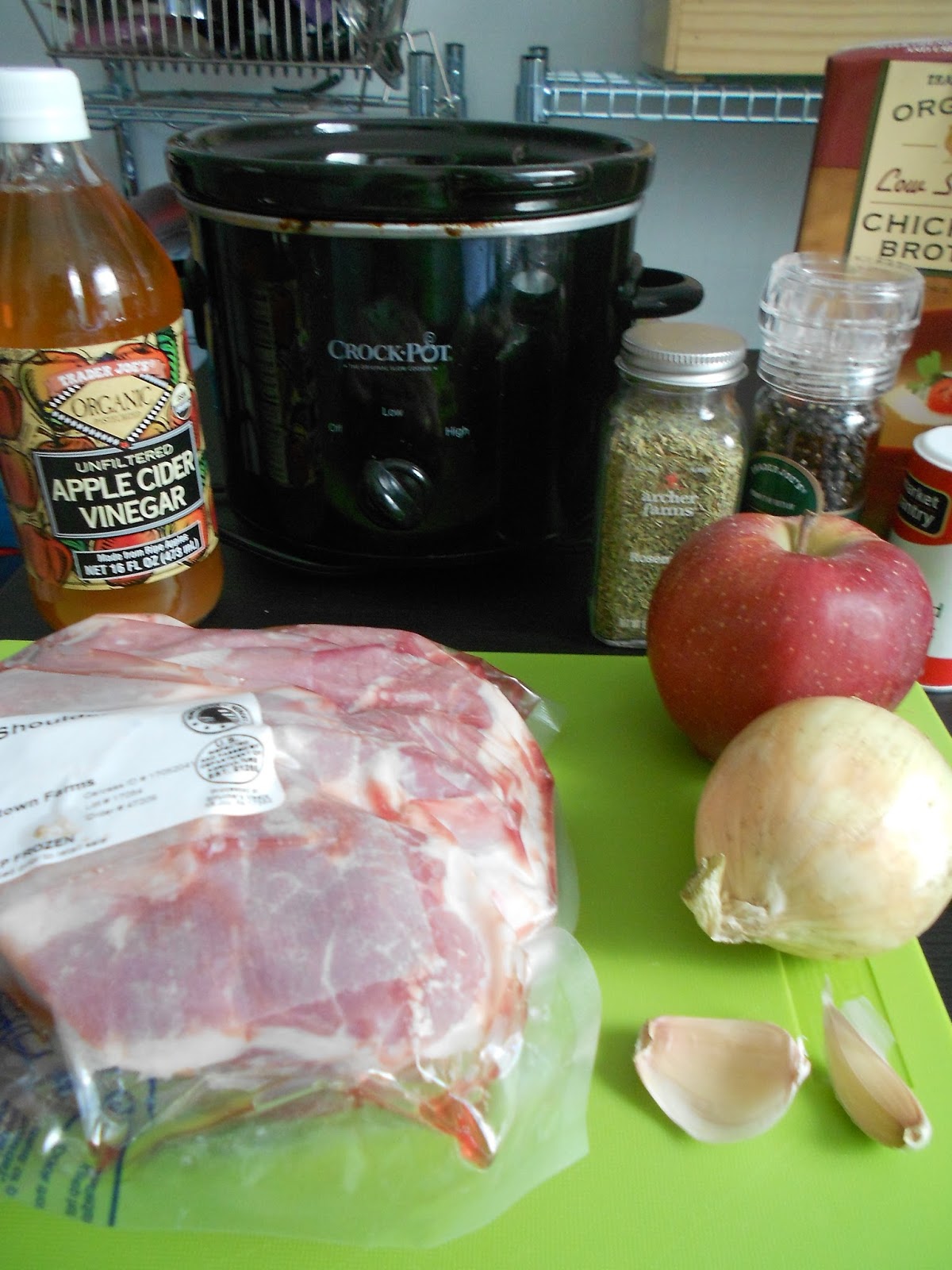
Crock pots for the win!
We all have some type of relationship with food. The act of eating give us the energy we need to live. Food gives us the nutrients to live healthy lives. The kinds of foods we eat often help to identify our cultural background. Experimenting with different recipes shows our creative and adventurous side (especially if it involves whatever I find at the back of my pantry).

Food has a big social impact on our lives. It's recommended that families sit down and eat dinner together to help with child development. Friends go out for lunch to catch up with each other. A romantic date likely starts off with a fancy dinner. Parents pass down family recipes to their children.

There are entire industries built around food. There are dozens of cooking shows and at least two networks I know of in the US that are totally dedicated to food. Celebrity chiefs have created empires around their cooking. There are travel shows dedicated to showing off a new city or country's best places or most unusual places to find a bite to eat.

Many communities have distinct foods that they identify with.

Roasted marshmallows - a summer time staple
The United States has a lot of these subcultures entirely based around food, occasionally leading to food wars. New Jersey, New York, and Chicago all claim to have the best pizza. The city of Chicago once sent the comedian Jon Stewart a Chicago Deep Dish Pizza after he insulted it on his show to prove that their pizza was truly the best. The southern part of the United States will never agree on who has the best BBQ. An argument that I won't touch with a ten foot pole (but I'm partial to Eastern North Carolina's style). And Old Bay seasoning and blue crabs is probably it's own food group in Maryland.

Food is also how we connect with cultural heritage. In many cities in the US you'll find a Little Italy, Chinatown, or Latin Quarter. These neighborhoods were where newly arrived immigrants from one country could live and be close to other people who were from the same country. People brought their favorite foods with them and would open restaurants.

I grew up eating a lot of different types of food. Between my family and my friends' parents, there were tons of home cooked dishes I got to try from many different cultures. I had friends whose mother's cook make samosas from scratch. I grew up eating a lot of traditional Japanese and Guyanese food (that I rarely find in restaurants). And I swear that nothing beats my mom's goulash or her homemade humus and tabbouleh.

One of the strangest back handed compliments I ever received was that I grew up eating "a lot of weird food". The person I was with claimed to have grown up eating "normal food"- whatever that means. Needless to say that relationship didn't last. As far as I'm concerned, there's no such thing as "normal food". There's just food.

So it stands to reason that with food being such an important part of everyone's culture, it would be easy to write about. Right?

Well, sort of. Much like portraying food visually is an art (one that usually involves a lot of fake food), writing about food can be equally challenging. There are only so many times I can write the word delicious in my blog and not think I'm just being overly dramatic about my own cooking.

There's an entire vocabulary around food, one that is as vast and rich as any delicacy.

Not only does a writer have to think about the vocabulary, but the culture surrounding that food. What kind of food does a dessert community have that would be very different than a community on a tropical island? What goes into preserving food when there isn't a fridge to be found? There's a lot of research that needs to go into writing about food.

As this introduction has concluded: FOOD IS IMPORTANT.

If you enjoyed this post (or it really pissed you off) please like, share, and/or leave a comment. I love hearing from my readers and I hope you guys like hearing from me.

Sunday, November 26, 2017

Welcome to Folklore and Mythology: The Intro

As I've been pursuing the Internet over the past few weeks, I keep coming back to mythology and folklore. If there's one culturally universal "thing" that all humans seem to enjoy, it's a good story. From fairy tales to ghost stories, religious text and mythology to tall tales, everyone seems to have a story to tell.

Stories that are remembered and retold can say a lot about a culture. They often contain elements that are important to the culture that story was written in. Most of these stories have a lesson that the protagonist and reader learn together. Then again, these stories might not have any point at all and simply show how a culture tells a story.

I especially love the folklore and fairy tales that are about mysterious magical creatures that challenge the protagonist. I loved hearing about Baba Yaga, the Kappa, and the Jersey Devil and how the hero would escape encountering these creatures. They were fantastical and mesmerizing, but also frightening. These stories taught young me how to be brave and that there are different ways to fight an opponent that I'm no match for.

This is a type of Tengu (according to Google)
Ghost stories often encompass a culture's history. I first got into hearing ghost stories by watching Haunted History on the (used-to-be) History Channel. The show would pick a city or state and tell spooky stories about select locations. They'd include an explanation of the culture of the time and why someone would take the actions that they took in the context of the story. Young me enjoyed learning history with a slightly spooky edge. It made things interesting.

Mythology is everywhere in our modern culture. The third Thor movie just came out and there were a lot of (incorrect) references to Norse mythology. One of the top movies of this past summer, Wonder Woman, was (if you squinted) all about Greek and Roman mythology. Several TV shows incorporate mythology into their story lines such as Jackie Chan Adventures (Chinese), Xena Warrior Princess (Greek), Lucifer (Christian), and Supernatural (pretty much everything under the sun).

I couldn't conclude this post without mentioning the books that often introduce kids to these stories. Percy Jackson is probably the best known series right now, but I was introduced to these mythologies and folklore through Fruits Basket, Asterix, The Immortal Diaries of Nickolas Flamel, and Harry Potter.

So over the next few weeks, I'm going to be looking at different folklore and mythologies and how they have influenced, reflected back, and changed with modern culture (particularly American and western culture). I want to see if some stories are truly universal, such as Cinderella and Beauty and the Beast are often claimed to be.

Disney has created a whole franchise dedicated to fairy tales.
I am doing this because we are a people who love stories and how better to learn people than by listening to their stories.

Until next week.

If you enjoyed this post (or it really pissed you off) please like, share, and/or leave a comment. I love hearing from my readers and I hope you guys like hearing from me. Please let me know in the comments if there is a specific folklore or mythology you'd like me to look at.

Sunday, August 6, 2017

Welcome to Icons Part 4: Emoji

Last week, we were gifted with one of the worst movies of the year. With 7% on Rotten Tomatoes, The Emoji movie is clearly not one of the must see movies of the summer (though 44% of people seem to like it).

I haven't seen the movie, so I can't comment on exactly why it's bad (though I'm sure I could find out if I really wanted to). Hopefully it'll quickly disappear into the void of forgotten bad media and we'll have better animated movies to talk about.

So why even bring up a terrible movie when I'm writing about icons? Clearly this won't be considered an iconic movie anytime soon.

It's because emoji are icons.

He's a cool smiley face!
No, I'm not joking. Emoji are images that symbolize different things, which is one of the definitions of icons. Most emoji have one very specific meaning, but some have gained multiple meanings as people use them more and more. There can be a lot of nuance in their context, similar to how we use other images and language.

Most emoji meanings are fairly straight forward. If someone sends a heart emoji, the first reaction isn't that the sender wants a heart. It means that they are expressing their love for something or someone. The majority of people are going to know that when they are sent a happy emoji.

The ways we communicate is constantly evolving. Texting and social media have led to fewer face-to-face interactions, which can cause miscommunication when an emotion can't be detected. Sarcasm in particular has been hard to convey just through text. The use of emoji helps us to communicate emotions when we can't see each other. It is an expression of our feelings. Facebook has changed it's "like" button into several emotional choices for people to react with.

Some companies have embraced this change in communication. The pizza delivery industry has been running a bunch of promotions about how you can order your favorite pizza by texting the pizza emoji. All so that we can get our pizza even faster.

There are some less obvious ones that have taken on completely different meaning from the original image, like how the eggplant is being used by hookup culture. It's similar to how slag forms. The younger generation develops it, mass media embraces it, all while the older generation looks on in confusion. As the new meaning of an emoji evolves and changes, it becomes the new accepted definition. Which is kind of what happened with the original definition of icon. Few people will automatically associate religious imagery with icons in this day and age.

But that doesn't mean we needed an entire movie dedicated to the smiley face.

If you enjoyed this post (or it really pissed you off) please like, share, and/or leave a comment. I love hearing from my readers and I hope you guys like hearing from me. Until next week.

Sunday, February 26, 2017

Welcome to Comfort Food

If there's one thing I know about myself, it's that I love food. Some of my fondest memories are tied to food and family meals. I've been writing a food blog for a little over a year (for shameless advertising click here). Heck I recently found my travel journal from Japan (I went when I was 11) and I wrote a lot about the food I had.


Our culture seems to be obsessed with food. Almost every social media platform has a food section and I've seen many people taking pictures of their entrees at restaurants. And why shouldn't we love food? After all it's something we need to survive.

Eating usually starts at home and with our families. My family would either eat at the dinner table or on TV trays while watching the latest episode of our favorite show. I learned to cook from watching my parents and extended family in the kitchen and at the side of the grill. I even managed to set myself on fire once, though I'll probably never live that one down (it was only once and it did get me out of helping out with Thanksgiving after that).

I have a few comfort dishes that I love having when I'm visiting my family. I love having my mom's chicken paprikash or goulash, but she has to be the one to make the dishes. Nabe is one of my all time favorite Japanese dishes that I have when visiting my family in North Carolina. I've tried to recreate some of these dishes (with varying degrees of success), but they always seem to taste better when I'm with my family.

Most people I know have a deep connection one way or another with food. For some, it's a connection to their culture and heritage. For others it's deeply tied to family events like Thanksgiving. Or you could be like my sibling and sit in front of the Julia Child's kitchen display at the American History museum, worshiping your idol.

This past weekend, I went to one of my old roommate's birthday parties. She decided that she wanted to theme the party around food she had as a little girl growing up in Brazil. I didn't grow up eating Brazilian food, so I got to try a bunch of new things. Everything was absolutely delicious and there was so much of it that I got to take some home. My friend was so excited to share the food with her friends and it made her so happy to explain what everything was to those of us not familiar with the food.

It can be a lot of fun to experiment with flavors and ingredients, but there's something a little extra special eating the food you grew up with. It's the recipes that are passed down from one generation to the next that are true treasures. It's not just food anymore, it's a memory or an experience. I've even heard it said that parents who cook with their children are able to build stronger bonds.

I am thankful and grateful that I was able to learn how to cook from my parents. But it's not an experience everyone gets to share. Hunger is still a major problem in America and food deserts* don't seem to be going away anytime soon. There are many people who don't know where their next meal is coming from or if there will be enough to keep their children full through the night.

Food is a part of our culture. It can be tied to found memories with our family and friends. We can pass our favorite dishes down to our children and hope they pass it on to there's. We can share recipes with friends and post pictures online. We can donate to our local food pantries to help families in need.

We all need food to survive, but comfort food is for us to share.

If you enjoyed this post (or it really pissed you off) please like, share, and/or leave a comment. I love hearing from my readers and I hope you guys like to hear from me. Until next week.

*According to the USDA a food desert is: "parts of the country vapid of fresh fruit, vegetables, and other healthful whole foods, usually found in impoverished areas. This is largely due to a lack of grocery stores, farmers' markets, and healthy food providers."