Translate

Showing posts with label tropes. Show all posts

Sunday, May 15, 2022

Welcome to the Cozy Mystery

For the longest time, I only read mystery books. 

Nancy Drew books were some of the first - their eye catching art motivating me to learn how to read. The logic was easy to follow and occasionally, I could solve the mystery before the big reveal. After Nancy Drew and Encyclopedia Brown, I jumped right into Agatha Christi. 

Agatha Christi is the Queen of mystery series. She wrote Hercule Poirot, "And Then There Were None", and of course, the little granny knitting away and catching murderers, Miss. Marple. My grandparents had a ton of Agatha Christi books for me to pick from. And when I went through all of those books, I started going through the other mystery series they had stacked up in the many different bookshelves scattered throughout their house. 

Eventually I found my way to "The Cat Who..." series by Lillian Jackson Braun. I loved how easy to read the books were and enjoyed the narration of the main character Jim Qwilleran and hearing about the antics of his two Siamese cats Koko and Yum Yum. 

It was this series that formerly introduced me to the Cozy Mystery genre and its many wonderful tropes. Since my family seems to be drawn to these types of stories, they are the books I most commonly read outside of school (even to this day). 

My latest venture into this genre was "A Margin for Murder" the 8th book in the Beyond the Page Bookstore Mystery by Lauren Elliott. I'd say the book was fairly standard as far as Cozy Mystery Tropes are concerned, though not all of the big tropes were present. 

An alliteration for the title keeps it in the reader's memory better.

I most associate Cozy Mysteries with the following: 

  • Amateur sleuth. Bonus points if this sleuth is a woman in her mid-30s (it seems to be the most popular main character right now in this genre)
  • Romantic ties to law enforcement (either a new boyfriend/girlfriend or an ex). Could be a police officer, a government agent, or a lawyer. 
  • A hobby that links the sleuth to the mystery. Bonus points for ties to writing, books, knitting, cooking, fashion, or home remodeling (can also be an occupation).
  • The sleuth owns their own business or is a writer. I'm lumping these two together because this occupation allows for the main character to go off on adventures without risking their livelihood (at least too much). Typically these jobs are seen as quaint like tea room operators, fashion reporters, columnists, bookstore owners, or wedding planners. Home remodeling can be a hobby or an occupation. Bonus points for coffeeshop owners.
  • An animal side kick. Typically this is a dog or a cat, but there was one book I read that included a bird as the cute animal companion. 
  • Something to do with the paranormal or psychics. I've read series with witches, tarot readers, and psychics. Even "The Cat Who..." series had a cat that might have had some psychic abilities. Extra bonus points for ghosts and poltergeist activity.
  • Small towns or cities - it wouldn't be a Cozy Mystery if everyone didn't know everyone else. That way there are plenty of local suspects as well as shifty out-of-towners to be vary of. Think Cabot Cove in "Murder She Wrote". The majority of "The Cat Who..." books take place in Mouse County which is "300 miles North of everywhere".
There are other tropes that I've noticed over the years. Cozy Mystery titles usually have some kind of pun that centers on the main character's occupation or hobby and the mystery at large. At some point the sleuth becomes a suspect. Or (my current least favorite) the too many boyfriends problem - and it's always boyfriends for a mid-30s super-sleuth. 

However many predictable tropes these series have or how complicated it can be solve the mystery (sometimes its really obvious and other times the author pulls one of Christi's famous last minute clues), I enjoy returning to the genre every so often. When I go into a Cozy Mystery, I expect all of those things (yes, even the too many boyfriend).

What keeps me coming back to the many series in this genre are the characters and how they interact with each other. 

Sometimes its a fun aunt/niece duo, other times its a pet causing all kinds of trouble, or it could be a bored retiree looking for a little excitement. The characters typically have a ton of friends with big personalities. The suspects are all distinct and memorable. And the murder victims sometimes deserve what's coming to them. 

With the Cozy Mystery market so saturated, it takes a lot to stand out in the crowd. I've noticed that more Cozy Mysteries are branching out into other subgenres. I've already mentioned the witches and paranormal angles, but historical fiction is equally becoming a popular subgenre to host a Cozy. 

Personally, I'd like to see more mixing genres for Cozies. Science Fiction Cozies could take place on a space station with plenty of locked room scenarios (there are actually a few Star Trek books that might count as Cozies in this example). Western Cozies could offer a new perspective on law enforcement in the wild west. Fantasy Cozies apparently already exist, but could you imagine the potential for Urban Fantasy Cozies like the "Dresden Files" meets Miss Marple? 

I'm not sure how horror might work as a Cozy subgenre, as a Cozy Mystery is supposed to be relaxing and not high-stakes, but I'm sure some ambitious author (not me) could make it work.

Have you guys read Cozy Mysteries and if so, what were some of your favorite series? Did your Cozies mix genres at all? What are some of your favorite tropes in the genre. Leave a comment and let me know.

Until next week. 

If you enjoyed this post (or it really pissed you off) please like, share, and/or leave a comment. I love hearing from my readers and I hope y'all like hearing from me.

Sunday, March 3, 2019

Welcome to the Magic Numbers

I'm always amazed by how many people tell me they don't like numbers. Numbers, and by extension math, are a major part of our everyday lives. We use math to make purchases at the store, measurements to cook, and to calculate the restaurant tip (if you live in the United States).

You need math and numbers to cook
Numbers don't even have to be math or science related. They are used in music, art, and even literature. Numbers pop up even where the math evasive are least likely to suspect. Their uniqueness creating a language all it's self.

I'm not just being poetic with that last sentence. One of my parents got out of needing a foreign language requirement for their graduate school because math was considered a separate language from English at the time (they had an undergraduate degree in math).

My point is, that numbers have a larger meaning in our lives.

Religions often have significant numbers. The most common numbers in the Bible are one (denotes singleness), three (the Trinity), four (creation), six (man), seven (completeness), twelve (divine completeness), and forty (probation or trials). I am also somewhat familiar with the importance of numbers in Buddhism, paganism, and Wicca.

A five pointed star is significant to witches
Folklore and mythology also often have significant numbers. The "rule of three" is one of the most common, such as accomplishing three tasks to reach a reward (Psyche and Eros, Rumpelstiltskin), having a trio of protagonists (Three Little Pigs, Three Billy Goats Gruff), or a repeated phrase of three words (veni, vidi, vici). Seven is another number associated with auspicious meaning, such as the seventh son of a seventh son will be able to see spirits or it's association with magic (Harry Potter references this).

There are even numbers people are afraid of.

While 7 is often seen as lucky, 13 is incredibly unlucky (especially if the 13th lands on a Friday). In Japan 4 is associated with death (due to its pronunciation sounding very similar) and is equally avoided. Three sevens might mean heaven, but three sixes are a sign of demons.

Literature is full of numeric symbolism.

A few paragraphs before I mentioned the rule of three and that continues to pop up in modern literature. Three is also seen in the tropes third time's the charm and the power of three (Charmed anyone?). The five man band is a popular team structure, as seen in Avatar the Last Airbender, Voltron, and Power Rangers. These teams include the team lead, the lancer, the smart one, the big guy, and the "heart" (which is usually, but not necessarily, a girl).

We can't escape numbers. They're built into our universe.

There are multiple irrational numbers which occur naturally. Pi and the golden ratio (Fibonacci sequence) show up everywhere, but have decimal places so far out that we usually have to round them two places.  Any time you look at a circle, there's an example of pi, and the golden ratio can be found in flowers, sea shells, and hurricanes (click here to see more examples).

Hey guess what, I just wrote a blog post all about numbers and most of it wasn't even about mouth. Okay, a few of the paragraphs were about math, but a lot weren't.

It's numbers that make the world go round.

The number I am most currently focused on is 100. My goal for this year is to get 100 rejections. If I get 100 rejections, I'll know I have been submitting my writing enough. Writing is hard work and it's even harder to get published. Finding the right fit for a piece of fiction is tough. What one editor might hate, another might love. So, 100 is my number of the year.

Until next week.

If you enjoyed this post (or it really pissed you off) please like, share, and/or leave a comment. I love hearing from my readers and I hope you guys like hearing from me.

Sunday, February 3, 2019

Welcome to the Misunderstood Villain

This week's topic came about for a couple of reasons:


1) I saw the play "Wicked" - which was awesome

2) I started watching the latest incarnation of "Where in the World is Carmen Sandiego" - rebooted by Netflix

3) A conversation I had at dinner last week with a group of amazing writers regarding our treatment of some of history's greatest heroes...or were they really villains?

It's that conversation that's been getting the wheels in my head turning. We were mainly discussing how Alexander the Great (or the Bastard depending on where you're from) has been turned into a bit of a hero in our modern retelling of his conquests. In reality, he killed a lot of people and there are some places today who still hate his memory. Heck, Alexander built a land bridge to reach a well fortified island which refused to surrender to him and, when he finally reached the island, he proceeded to murder everyone there.

But the way Hollywood puts it, he was an amazing guy who was trying to unite the world, flawed, but still repetitively cool. The same treatment happens to a lot of conquerors. We definitely have a fondness for the Roman Empire, despite the fact that they pretty much enslaved everyone they conquered.

However, since history is written by the winners, we get to hear all about the greatness of some of history's worst people in the best light. They weren't ruthless invaders out to murder and enslave, they were trying to unite their people and gather more resources.

One of the writers in the group even brought up the idea that some of our greatest monsters in modern history could one day get this type of treatment. I really hope not, but that doesn't mean it's not possible.

Anything is possible.

Especially since Hollywood and other medias really like the misunderstood villain trope right now.

This trope has popped up a lot recently (along with the bait and switch villains, but that's another blog post/rant). We see it in the play and book "Wicked", there was the recent re-imagining of Sleeping Beauty by Disney where Maleficent was really the good guy all along, and you have the countless retelling of fairy tales told from the villain's perspective.

This isn't a bad trope and it occasionally goes hand in hand with the equally interesting villain redeemed trope.

I'm just starting to see it over and over again.

When this trope is done well, it's really good and interesting. I love Zuko's character arc in "Avatar the Last Airbender" and "Wicked" is great (so long as you don't think too hard about some of the inconsistencies between the original book and movie). I freaking loved "Wicked".

But I'm starting to feel it's becoming overdone.

In recent years we've had loads of examples of the misunderstood villain, my personal favorite being Loki in the Marvel Cinematic Universe. There's also the characters in the Disney remakes (I've already mentioned Maleficent, but also the Red Queen in Alice in Wonderland), Lucifer in Supernatural, and multiple Batman villains (minus the Joker) like Mr. Freeze and the Penguin.

Again, it's not a bad trope. It just needs to be done well.

"Wicked" is an amazing book and play. I can totally believe that the Wicked Witch of the West got her reputation by defying the wizard and wanting to be a freedom fighter instead, just not in the context of the original book. For one thing she wasn't green and another she isn't even that much of a protagonist. The original Wizard of Oz book is more or less a road trip with obstacles story with the Wicked Witch of the West briefly appearing around the midpoint of the story before Dorothy kills her.
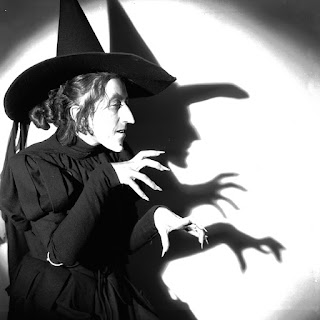
The wicked witch I remember
Her character in "Wicked" is so far removed from her character in the book, I wouldn't believe they were related at all if I didn't have a story synopsis tell me they are.

Now I'm watching the re-imagining of "Where in the World is Carmen Sandiego". As a kid, Carmen Sandiego was a bad guy. There was no questioning this and the members of ACME were the good guys putting a stop to Carmen's horrible plans. In this version, she's a spunky teenage white hat thief trying to get back at the real bad guys who raised her. I think it's a really entertaining show and fun character, but I'm having a hard time equating her with the villainous character I grew up with.

I understand what's going on with these stories. People like retelling stories with characters they're familiar with (which is probably why we've seen so many versions of Sherlock Holmes) and hearing a story I'm familiar with told from a different point of view is a lot of fun when done well.

Batman is remade all the time. Sometimes he's campy and fun, other times gritty and serious. My personal favorite version of Batman is from the "Animated" universe which lead into the "Justice League" cartoon series. There he was a good balance of serious and humorous. However, that version could never be mistaken for the "Dark Knight" Batman or the live action TV show version.

It's fun to see characters and stories in new ways. Real life isn't always as straight forward as we want it and people can recall the same events very differently. Sometimes villains aren't villains, they're scapegoats or people in the wrong place at the wrong time.

There's a song in "Wicked" that goes into this a bit called "Wonderful" sung by the Wizard. It really drives the theme home that Elphaba is being scapegoated by the real villains of the story. They're rewriting history so that she's not a freedom fighter but a terrible wicked witch.

I love "Wicked", Tom Hiddleston as Loki, and even the Supernatural version of Lucifer.

But there are some villains that I don't think deserve this makeover.

A certain serial killer is getting the Hollywood treatment. I highly doubt the movie is going to make him out to be some misunderstood individual, this guy was pure evil. It's just that there are some people who might idolize him and the movie might show him in a more sympathetic light than he deserves. I don't know for certain that it will, but the

It's one thing if it's a fictional character getting these makeovers, but I don't like the idea of a real life villain getting one. The families the above mentioned serial killer's victims are still alive and still have to live with the horrible things that happened.

These villains don't deserve the "misunderstood" treatment.

If you enjoyed this post (or it really pissed you off) please like, share, and/or leave a comment. I love hearing from my readers and I hope you guys like hearing from me.

Until next week.

Sunday, September 16, 2018

Welcome to the Witching Hour Part 5: Teen Witch Craze

I recently started watching the Netflix show Worst Witch. It’s about preteen girls learning how to become witches at a magical boarding school. Within the first episode there are magical potions, flying on broom sticks, and a battle between a good witch and a bad witch. So far, I’ve really enjoyed the show.

This isn’t the first incarnation of Worst Witch. Originally a book series, Worst Witch has had a total of four TV iterations (one being a spin off) with the fist being the 1985 TV movie. It’s clear that the story of Mildred Hubble is popular and has resonated with a lot of people.

Worst Witch is just one example of the trope that a young child discovers they have magical powers and must now learn how to control them all while avoiding evil witches and wizards. Harry Potter is another well known example of this trope.

However, it isn’t the only story line out there featuring witches. Tales of sisterhood and coming of age are also popular tropes to show up in Witch related media. At least the witch related media aimed at young women and children tend to have these story lines. Harry Potter is the odd one out as it is generally considered for all people.

That’s not to say that men and boys can’t like women driven story lines, especially of the magical variety. These stories just aren’t targeted to them the same way they are targeted to women. The 1980s, 1990s, and 2000s saw a lot of witch media hit the big and small screen that was almost explicitly for young women.

In 1989, the movie Teen Witch hit theaters. It was trying to capitalize on the genre of teen flicks with a supernatural or paranormal undertone that became popular with the release of Teen Wolf in 1985. The same year that Teen Witch hit theaters, Studio Ghibli released the animated movie Kiki's Delivery Service in Japan. Kiki's Delivery Service also featured a young witch teenage witch (Kiki is 13 in the movie) trying to make her way in the world. The Craft and Sabrina the Teenage Witch both became cultural icons in 1996 and were quickly followed by the movie Practical Magic (1998) and the TV series Charmed (1998 - 2006).

The look so cool and powerful!
Disney Channel took notice of the rising popularity in witches, especially for young girls, to create several made for TV movies including: The Halloweentown series and the Twitches movies.

It would be silly of me to not include the rise in popularity of Harry Potter in the 1990s that has lasted all the way to today. We now have two popular movie franchises, an official play, multiple unofficial plays, and more books than my bookshelf at home can hold. More importantly, we have the characters of Hermione Granger, Ginny Weasley, Mrs. Weasley, and Tonks who were pivotal in shaping the confidence of many young girls looking for literary role models.

Of course we still had the movies and TV shows featuring evil witches. Hocus Pocus (1993) is still one of the most iconic Halloween movies for kids who grew up in the 90s. The Witches of Eastwick (1987) had an all star cast with plenty of nasty shenanigans and still ended with the ladies taking on the big bad guy in a show of sisterhood. Then there’s the 1990 adaptation of Roald Dahl’s book The Witches which gave young me many a nightmare. At least the movie ends a lot happier than the book where the children are stuck as mice instead being turned back into children by a nice witch.

My point is that there has been a lot more media in the past 4 decades featuring witches in a positive light than a negative one. Sure we had the Bewitched series from 1964 to 1972 which I think helped spring board the “good witch” stories we eventually got. However, the horror industry of that era continuously used the “bad witch” trope in their sploitation movies (most of which are hilariously bad).

Now “bad witch” movies aren’t the norm.

Occasionally we’ll see a Blair Witch (1999 and 2016) or The Witch: A New England Folktale (2015), but these types of scary movies are now few and far between. Most Witch media now is fun, happy, and how to be a good witch. Witches are seen as teachers of empowerment instead of a people to be feared.

Is it any wonder that some girls went through a witch phase in middle or high school? Having magical powers isn’t just about solving your problems or getting revenge against the mean girl at school. In fact, the petty, mean, or dangerous spells usually resulted in an important lesson on not misusing magic and the consequences of selfish acts. Magic in these shows is about finding a sense of self empowerment and feeling good about your own abilities. At least that’s what I got out of the books, movies, and TV shows I consumed.

It’s also why I love idea of being a witch.

If you enjoyed this post (or it really pissed you off) please like, share, and/or leave a comment. I love hearing from my readers and I hope y'all like hearing from me.

Until next week!

Sunday, March 5, 2017

Welcome to Metropolis

I have made it my mission to see as many classic movies as I can. It took me a long time to appreciate older movies (basically anything that wasn't in color). There was a point in my life that I thought all films that weren't in color were boring and not worth watching. I used to hate it when my mom would put on one of her Betty Davis movies or when she'd have a Turner Classic Movies marathon going on all day. Thankfully I have since learned the error of my ways.

My preferences for older movies (or those made before my parents were born) tend to be along the liens of mystery noir, campy horror, and fast talking comedies (mostly starring Carry Grant). In recent years, I've been doing my best to branch out and see as many "classics" as I can. Silent films are my latest obsession, mostly because they are a lot harder to find*. They are incredibly interesting to watch since all of the acting is based on movement and facial expression. The ones that have survived helped set the standard for modern film making and created many of the cliches and tropes we know and love today.

The movie Metropolis is on many "must see movie" lists. It's a silent German Expressionists film from 1927 that is considered one of the first (and possibly most influential) science fiction film of that era, though I hesitate to keep it in the science fiction genre. By today's standards it feels like it should be neatly put in the steam punk genre. It can be viewed on Netflix right now if you have 2 and a half hours to spare. 


For those who are unfamiliar with Metropolis, it takes place in the  2026. The lower classes must toil away below ground, keeping the great city running, while the elites are allowed to spend their days as they please with lavish parties and gardens for them to enjoy. One fateful day, the son of the ruler of the city witnesses an explosion that kills some of the workers and decides that something must be done. There's also a pretty girl, a mad scientist who builds a "machine man", and an evil plot to destabilize the city. The everything is resolved by holding hands (no seriously this is how the movie ends).

I would call this movie cliche, except that it was created well before most of these tropes were considered cliche. For example the mad scientist has super crazy hair, which I think is how you know he's a mad scientist. He is hung up on his dead ex-girl friend, which is why he created the "machine man". There's also a lot of blatant religious symbolism that at times feels over the top at times. The tower of Babel is referenced quite a bit.

Then again there's a lot of things that are over the top in silent films. The story is told through the acting and facial expressions since you can't hear the dialog. There's a lot of exaggerated movements, heave shadows, and the makeup makes people's facial expressions really stand out. I couldn't help noticing how much eyeliner everyone was wearing and I definitely burst out laughing a few times when the film wasn't trying to be funny. There's a really trippy dream/hallucination sequence that I had a hard time following.

So much eyeliner
But please don't think I dislike this film. As over the top and cliche it is by today's standards, Metropolis is incredible to watch. The story is very entertaining to watch unfold and a lot of the major themes are still relevant to problems we face today. The special effects and stylized imagery are amazing. It's easy to see where a lot of modern cinema found its influence. 

Metropolis might seem better suited to the steam punk genre now, but there are a few things that I totally see in the year 2026. The mad scientist character, Rotwang, builds a "machine man" (exact text, I would have used the word mecha) who is supposed to look like his dead ex-girlfriend. I can totally see robots designed to look a specific way being available in less than a decade. There's also the issues and tensions between the working class and elites. The extreme wealth gap between the haves and the have-nots nearly destroys the city in the film. It's not that hard to see comparisons to the struggles people face today.

Metropolis isn't the first German Expressionist film I've watched. The Cabinet of Dr. Caligari was actually my first film in the genre and it's a lot of fun to watch. The eerie set designs and make up add to the creepiness of the story and would be extremely difficult to recreate for today's audiences. It also has a twist ending that no one will see coming. If you enjoy horror movies, it's a great movie to watch.

Cinema is a recent addition to the human narrative. There have been a lot of innovations and advancements in film's story telling, special effects, and visual devises since people first started making movies. But that doesn't mean that we can't appreciate the movies that started it all. I 100% recommend seeing Metropolis at least once to appreciate what its done for modern cinema.

Story telling is a universal constant for human societies. They have helped reflect and shape culture. It can be amazing to read or watch something written nearly 100 years ago and see that it still applies to modern audiences. What types of story telling experiences will be available in the future? Will virtual reality and gaming be the next great innovations for story telling? 

I have no idea, but I'm excited to find out.

If you enjoyed this post (or it really pissed you off) please like, share, and/or leave a comment. I love hearing from my readers and I hope you guys like hearing from me.

Until next week.

*Hugo is an excellent film that goes into why a lot of older films weren't preserved and why the few that are should be treasured.