Translate

Sunday, March 3, 2019

Welcome to the Magic Numbers

I'm always amazed by how many people tell me they don't like numbers. Numbers, and by extension math, are a major part of our everyday lives. We use math to make purchases at the store, measurements to cook, and to calculate the restaurant tip (if you live in the United States).

You need math and numbers to cook
Numbers don't even have to be math or science related. They are used in music, art, and even literature. Numbers pop up even where the math evasive are least likely to suspect. Their uniqueness creating a language all it's self.

I'm not just being poetic with that last sentence. One of my parents got out of needing a foreign language requirement for their graduate school because math was considered a separate language from English at the time (they had an undergraduate degree in math).

My point is, that numbers have a larger meaning in our lives.

Religions often have significant numbers. The most common numbers in the Bible are one (denotes singleness), three (the Trinity), four (creation), six (man), seven (completeness), twelve (divine completeness), and forty (probation or trials). I am also somewhat familiar with the importance of numbers in Buddhism, paganism, and Wicca.

A five pointed star is significant to witches
Folklore and mythology also often have significant numbers. The "rule of three" is one of the most common, such as accomplishing three tasks to reach a reward (Psyche and Eros, Rumpelstiltskin), having a trio of protagonists (Three Little Pigs, Three Billy Goats Gruff), or a repeated phrase of three words (veni, vidi, vici). Seven is another number associated with auspicious meaning, such as the seventh son of a seventh son will be able to see spirits or it's association with magic (Harry Potter references this).

There are even numbers people are afraid of.

While 7 is often seen as lucky, 13 is incredibly unlucky (especially if the 13th lands on a Friday). In Japan 4 is associated with death (due to its pronunciation sounding very similar) and is equally avoided. Three sevens might mean heaven, but three sixes are a sign of demons.

Literature is full of numeric symbolism.

A few paragraphs before I mentioned the rule of three and that continues to pop up in modern literature. Three is also seen in the tropes third time's the charm and the power of three (Charmed anyone?). The five man band is a popular team structure, as seen in Avatar the Last Airbender, Voltron, and Power Rangers. These teams include the team lead, the lancer, the smart one, the big guy, and the "heart" (which is usually, but not necessarily, a girl).

We can't escape numbers. They're built into our universe.

There are multiple irrational numbers which occur naturally. Pi and the golden ratio (Fibonacci sequence) show up everywhere, but have decimal places so far out that we usually have to round them two places.  Any time you look at a circle, there's an example of pi, and the golden ratio can be found in flowers, sea shells, and hurricanes (click here to see more examples).

Hey guess what, I just wrote a blog post all about numbers and most of it wasn't even about mouth. Okay, a few of the paragraphs were about math, but a lot weren't.

It's numbers that make the world go round.

The number I am most currently focused on is 100. My goal for this year is to get 100 rejections. If I get 100 rejections, I'll know I have been submitting my writing enough. Writing is hard work and it's even harder to get published. Finding the right fit for a piece of fiction is tough. What one editor might hate, another might love. So, 100 is my number of the year.

Until next week.

If you enjoyed this post (or it really pissed you off) please like, share, and/or leave a comment. I love hearing from my readers and I hope you guys like hearing from me.

Sunday, February 24, 2019

Welcome to More to Read

Black History Month is almost over, but that doesn't mean that anyone should stop learning about black history or what it means to be black in America. 

Prior to the start of Black History Month, I saw a meme on Facebook asking who was the reader's favorite black author, their favorite black filmmaker, poet, etc. and I realized how few of these answers had more than two people for me to choose from. Some of the categories only had one person for me to pick.

It also got me to realize that I often don't think too hard about who the author is of my favorite stories. Well, unless it's J K Rowling, Stephen King, or (ugh) Nicholas Sparks.

So I started going over the books I was hoping to read over the coming year. There are a lot, but that's beside the point. What I noticed is that, even thought here were a wide variety of books by genre (fantasy, classic, business, etc.) the author's I was picking up weren't the most diverse group of people. The authors were primarily white men.

Back in high school, I'd read a lot of great books by a wide variety of authors. I especially loved Chronicles of a Death Foretold  by Gabriel García Márquez, Their Eyes Were Watching God by Zora Neale Hurston, and From Heaven Lake: Travels Through Sinkiang and Tibet by Vikram Seth (I think I was the only one who liked this last one in my class, but I could be wrong).

So why wasn't I doing the same as an adult?

Heck, I love science fiction and I hadn't even read Octavia Butler (I know, take my science fiction fan membership away now).

For Black History month, I celebrated by reading and supporting black authors. I picked up a collection and of poetry by Morgan Parker. I found her poetry to be raw and incredibly emotional. I just started For Colored Girls who have Considered Suicide When the Rainbow is Enuf a choreopoem by Ntozake Shange and have Don't Call us Dead a poetry collection by Danez Smith for right after.

Seriously read this amazing book.
I also picked up Tomi Adeyemi's Children of Blood and Bone. If you love fantasy, were a fan of Avatar the Last Airbender, or just need an all around amazing book, this is for you. I can barely put it down. When the TV show and/or movie is made, they had better give it the Harry Potter or Game of Thrones treatment. I've heard that there rumors that Rick Famuyiwa has been hired to direct.

Even more exciting, the sequel, Children of Virtue and Vengeance is coming out in June! Yes!

Until next week.

If you enjoyed this post (or it really pissed you off) please like, share, and/or leave a comment. I love hearing from my readers and I hope you guys like hearing from me.

Sunday, February 17, 2019

Welcome to Navigating the Commuter Trains

Short post tonight guys.

Random picture of Portland and Mt Hood

I’ve lived near a train station my whole life. 

Growing up in Virginia and around D.C. we had the Metro and VRE (Virginia Rail Express). The metro was fine - as long as you lived near one - it’s big grey honeycomb design unique to our city. Sure it occasionally floods, and catches fire, and there was that one time a lady gave birth at L’enfant Plaza station, but it works for us in D.C.. Unless you need to get to Georgetown. They didn’t want a metro stop, so you have to take a bus.

The VRE wasn’t the worst, but it was far from the best train system. It shares a line with Amtrak. There is absolutely no hope for you if you get on the wrong train and heaven help you if you miss the last one for the night. It only goes north in the morning and only goes south in the afternoon and evenings. 

I got on the wrong train once and ended up 45 minutes away from home. Never made that mistake again.

I didn’t much take the local train in Maryland. We had a convient line into Baltimore (with free parking), a more expensive line to D.C. (without free parking and at the airport), and Amtrak. I took Amtrak quite a bit for work to Philadelphia. It wasn’t too bad, fairly convient all around, and it was all better than the VRE.

New Jersey and New York are an entire different form of mass transit beasts.

The trains are always running. They are convient, easy to use (after maybe the 4th or 5th try), and can cost a pretty penny if you aren’t paying attention. Thankfully the subway is a flat rate to ride, but NJ Transit can get pricy when you’re a commuter.

Of all the mass transit I’ve ever had to get to know the ones for New York and New Jersey are the most infuriating and best. You can get almost anywhere by Subway, PATH (haven’t used),  or commuter train. It might take 2-4 hours, but it is possible. 

It’s also possible you might see rats the size of house cats, a fire or two, oddly dressed tourists, oddly dressed locals (but since they live here it isn’t really odd), and have the station you want to get off at unexpectedly closed so then you have to hope that the next station isn’t so you can backtrack or change trains.

By far the strangest experience I ever had on a train was when I was on my way home from a bachelorette party on the coldest night of the year. I managed to hope on the last train from Hoboken (sometimes known as The Vomit Comet) and things were relatively normal...until the guy in the seat across from mine decided that he couldn’t wait to get home to pee.

He got tossed off the train at the next station and I quickly moved to the next train car.

I’ve probably been spoiled by my easy access to public transportation. I love the freedom I feel knowing I can hop on a train to get to the airport or the city. It’s a bit of a trip, but the time spent on the train can be relaxing.

Even when I have to change trains in Secaucus.

Until next week. 

If you enjoyed this post (or it really pissed you off) please like, share, and/or leave a comment. I love hearing from my readers and I hope you guys like hearing from me.

Sunday, February 10, 2019

Welcome to the Genre of War

Yesterday, I was able to hear Nicholas Parisi give a talk on Rod Serling. He's an expert on everything Rod Serling and recently wrote a book which compiles everything Serling ever wrote from The Twilight Zone to Planet of the Apes. Parisi tracked down everything, including the first short story published by Serling.

Serling served in World War II, in the Philippines, as a paratrooper. The experience later influenced many of the works he wrote, including his first short story. The semi-autobiographical story centered around having supplies airdropped to his unit's location after 10 days of fighting without any food. One of the unit's members, and a character based off a real friend of Serling's, jokingly narrates the descent. The unit's relief quickly turns to horror as the supplies are dropped right on top of them, with enough force to decapitate the Serling's friend.

Guernica by Pablo Picasso - how he depicted the Spanish Civil War
I wish I could read the original story, but hearing the synopsis got me thinking. I've seen wars portrayed across many genres. From the real life inspired tragedies such as "War and Peace", "Battle of the Bulge (1965), and Glory (1989) to the mysteries such as Stalag 17 (1953) and The Night of the Generals (1967). There are the dramatic autobiographical stories such as "Band of Brothers" and Patton (1970). There are even comedies like "Hogan's Heroes" and "M*A*S*H" (the 1970 movie and TV show).

My dad is a bit of a war movie buff, so I've seen quite a number of war movies. He's particularly fond of the more action heroic World War II movies of the 50s, 60s, and 70s, such as The Dirty Dozen (1967), Where Eagles Dare (1968) and Kelly's Heroes (1970). These were movies that I watched a lot as a kid. The good guys always worked as a team to take down the evil Nazis and the Nazis were definitely the bad guys, there was no question.

Just like how monsters in horror aren't just monsters, war in fantasy, science fiction, and even horror isn't just about the war. It's often part of a larger commentary on human society, our technology, our ethics, and our ideologies.

In Harry Potter the wizarding war is about the evils of magical Nazis, while the original War of the Worlds shows how easily a civilization can fall to an enemy with advanced technology (basically it was written to show imperialist countries how easy it is to defeat someone with better technology and exploit their fears of invasion).

The wars depicted in the world of Narnia are often allegorical to fighting on the side of God and defeating evil. The war against the Fire Lord in "Avatar the Last Airbender" is about restoring balance to the world and finding a creative way to defeat your enemies without killing them (I love Aang's solution to this so no spoilers if you haven't seen the show - skip the movie).

Independence Day (1996) shows the tenacity of the human/American spirit in the face of an enemy that's hell bent on wiping us out as well as the horrors of weapons of mass destruction. And Star Wars is a classic good versus evil story.

Why does war one of those catastrophic events that can cross genres so easily?

My guess is because of how ingrained it is in our history as a species.We have historical accounts of war which we study, sometimes in our literary classes such as Homer's "The Iliad",  or to learn strategy such as the works of Sun Tzu "On The Art Of War". Some of these historical events have become historical fiction in the form of the movies like Gladiator (2000) and 300 (2006) - the later of which also includes a number of fantasy elements.

War is apart of our common human history. There hasn't been a civilization that we learn about in school, which hasn't been affected by war and violence in some way. The history of my country  starts with a war for independence.

There's a lot more on this subject that I can write on. I haven't even touched on the many video games that make the player question the ethics of their actions or contemplate how their actions might end up killing or saving millions of people. Heck, I didn't even mention my favorite fandom, the Transformers franchise (ignoring the Bay movies) which is all about the destruction of war on an alien species driven to Earth where they continue to fight.

The reason I chose to write this post is because I noticed that the subject of war easily crosses genres. Some writers use it as a commentary, while others are writing from a place of experience as a need to understand and come to terms with what they went through - like Mr. Serling.

War is horrible. There's no denying that.

And I honestly don't have a good, philosophical, or thoughtful note to end this post on. So I'll repeat the one statement I feel is most true:

War is horrible.

If you enjoyed this post (or it really pissed you off) please like, share, and/or leave a comment. I love hearing from my readers and I hope you guys like hearing from me.

Until next time!

Sunday, February 3, 2019

Welcome to the Misunderstood Villain

This week's topic came about for a couple of reasons:


1) I saw the play "Wicked" - which was awesome

2) I started watching the latest incarnation of "Where in the World is Carmen Sandiego" - rebooted by Netflix

3) A conversation I had at dinner last week with a group of amazing writers regarding our treatment of some of history's greatest heroes...or were they really villains?

It's that conversation that's been getting the wheels in my head turning. We were mainly discussing how Alexander the Great (or the Bastard depending on where you're from) has been turned into a bit of a hero in our modern retelling of his conquests. In reality, he killed a lot of people and there are some places today who still hate his memory. Heck, Alexander built a land bridge to reach a well fortified island which refused to surrender to him and, when he finally reached the island, he proceeded to murder everyone there.

But the way Hollywood puts it, he was an amazing guy who was trying to unite the world, flawed, but still repetitively cool. The same treatment happens to a lot of conquerors. We definitely have a fondness for the Roman Empire, despite the fact that they pretty much enslaved everyone they conquered.

However, since history is written by the winners, we get to hear all about the greatness of some of history's worst people in the best light. They weren't ruthless invaders out to murder and enslave, they were trying to unite their people and gather more resources.

One of the writers in the group even brought up the idea that some of our greatest monsters in modern history could one day get this type of treatment. I really hope not, but that doesn't mean it's not possible.

Anything is possible.

Especially since Hollywood and other medias really like the misunderstood villain trope right now.

This trope has popped up a lot recently (along with the bait and switch villains, but that's another blog post/rant). We see it in the play and book "Wicked", there was the recent re-imagining of Sleeping Beauty by Disney where Maleficent was really the good guy all along, and you have the countless retelling of fairy tales told from the villain's perspective.

This isn't a bad trope and it occasionally goes hand in hand with the equally interesting villain redeemed trope.

I'm just starting to see it over and over again.

When this trope is done well, it's really good and interesting. I love Zuko's character arc in "Avatar the Last Airbender" and "Wicked" is great (so long as you don't think too hard about some of the inconsistencies between the original book and movie). I freaking loved "Wicked".

But I'm starting to feel it's becoming overdone.

In recent years we've had loads of examples of the misunderstood villain, my personal favorite being Loki in the Marvel Cinematic Universe. There's also the characters in the Disney remakes (I've already mentioned Maleficent, but also the Red Queen in Alice in Wonderland), Lucifer in Supernatural, and multiple Batman villains (minus the Joker) like Mr. Freeze and the Penguin.

Again, it's not a bad trope. It just needs to be done well.

"Wicked" is an amazing book and play. I can totally believe that the Wicked Witch of the West got her reputation by defying the wizard and wanting to be a freedom fighter instead, just not in the context of the original book. For one thing she wasn't green and another she isn't even that much of a protagonist. The original Wizard of Oz book is more or less a road trip with obstacles story with the Wicked Witch of the West briefly appearing around the midpoint of the story before Dorothy kills her.
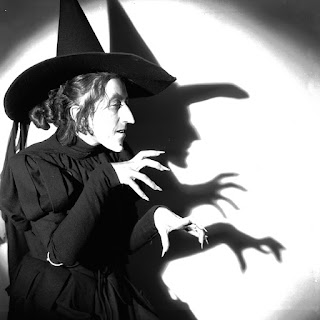
The wicked witch I remember
Her character in "Wicked" is so far removed from her character in the book, I wouldn't believe they were related at all if I didn't have a story synopsis tell me they are.

Now I'm watching the re-imagining of "Where in the World is Carmen Sandiego". As a kid, Carmen Sandiego was a bad guy. There was no questioning this and the members of ACME were the good guys putting a stop to Carmen's horrible plans. In this version, she's a spunky teenage white hat thief trying to get back at the real bad guys who raised her. I think it's a really entertaining show and fun character, but I'm having a hard time equating her with the villainous character I grew up with.

I understand what's going on with these stories. People like retelling stories with characters they're familiar with (which is probably why we've seen so many versions of Sherlock Holmes) and hearing a story I'm familiar with told from a different point of view is a lot of fun when done well.

Batman is remade all the time. Sometimes he's campy and fun, other times gritty and serious. My personal favorite version of Batman is from the "Animated" universe which lead into the "Justice League" cartoon series. There he was a good balance of serious and humorous. However, that version could never be mistaken for the "Dark Knight" Batman or the live action TV show version.

It's fun to see characters and stories in new ways. Real life isn't always as straight forward as we want it and people can recall the same events very differently. Sometimes villains aren't villains, they're scapegoats or people in the wrong place at the wrong time.

There's a song in "Wicked" that goes into this a bit called "Wonderful" sung by the Wizard. It really drives the theme home that Elphaba is being scapegoated by the real villains of the story. They're rewriting history so that she's not a freedom fighter but a terrible wicked witch.

I love "Wicked", Tom Hiddleston as Loki, and even the Supernatural version of Lucifer.

But there are some villains that I don't think deserve this makeover.

A certain serial killer is getting the Hollywood treatment. I highly doubt the movie is going to make him out to be some misunderstood individual, this guy was pure evil. It's just that there are some people who might idolize him and the movie might show him in a more sympathetic light than he deserves. I don't know for certain that it will, but the

It's one thing if it's a fictional character getting these makeovers, but I don't like the idea of a real life villain getting one. The families the above mentioned serial killer's victims are still alive and still have to live with the horrible things that happened.

These villains don't deserve the "misunderstood" treatment.

If you enjoyed this post (or it really pissed you off) please like, share, and/or leave a comment. I love hearing from my readers and I hope you guys like hearing from me.

Until next week.

Sunday, January 27, 2019

Welcome to the Power of "Common Sense"

"The people have read Mr. Paine's "Common Sense". I doubt very much the Congress has."
- Dr. Benjamin Franklin (1776, Howard Da Silva)

The above quote isn't actually from the real Dr. Benjamin Franklin. It's a line from the play 1776 which is about the creation and signing of the Declaration of Independence. In the play, John Adams declares that "the people want independence!" and the above quote is Dr. Franklin's reply. 

My family watches the movie (based on the play) at least once a year around the 4th of July, we've even seen the play on stage. I grew up in Virginia with all it's colonial and revolutionary history at my finger tips. I've read the "Bill of Rights" and "The Declaration of Independence".

But it wasn't until this year that I got around to reading "Common Sense".


I've been on a "classic" literature kick. Classic being a relative term as what is considered a classic by some people may not actually mean it's any good. Last year I read Machiavelli's The Prince. It was a tough read and I honestly couldn't tell haft the time whether Machiavelli was being serious or sarcastic half the time. Likely, it was a bit of both. It probably would have been easier to get through if I had had a better understanding of Italian history before the 1500s.

"Common Sense" was, thankfully, a lot easier to understand.

What finally got me to actively look for a copy of the pamphlet (which is less than a hundred pages long even with an introduction) was a different play about the history of America: Hamilton. The short work is prominently featured in one of the songs ("The Schuyler Sisters") and it got me curious as to what was actually written.

That and I found a copy of the book for $1.00 at a used bookstore. Score!

After reading the 94 pages (which included a few updates for after "The Declaration of Independence" was written and a scathing letter to a Quaker minster), I could see how it became a best seller of the 1770s. The arguments were compelling and had a basis in historical events and religious teachings (necessary for the time). 

There was also some noticeable racism and clear omission of certain groups of people (i.e. the African slaves, women) from his arguments. There were also a lot of references to slavery without actually addressing the institution of slavery within America. 

From my modern perspective, Mr. Paine's arguments were sound and understandable as long as you overlooked the things I mentioned in the previous paragraph. However, I could see where his ideas would be considered radical and extreme. The monarchy had ruled Europe with the help of the church for centuries and defying the monarchy was virtually unheard of...

Except, that Great Britain had already gone through radical changes of it's own. One piece of British history, that is occasionally taught in American public schools, is the English civil war which occurred in the middle of the 1600s. The rebels decided that they didn't like Charles I politics, so they got rid of him and his son. It was then that Oliver Cromwell rose to power for about 5 years before dying of natural causes and the British monarchy was eventually restored. 

This brief blip of British history is referenced a few times in "Common Sense" as is the Norman invasion in 1066, the history of the Jewish people from the Old Testament, and a bunch of other historical reasons as to why monarchies aren't actually ordained by God. Having some knowledge of these historical and biblical events is helpful while reading the pamphlet and would have been known at the time of it's original publication. These arguments further backed up Mr. Paine's final conclusion: That America should be Independent from Great Britain. 

The language in "Common Sense" is also quite inflammatory. It's written in a way that shows that Mr. Paine is completely convinced of his argument and that he has no room for doubt. If there had been even a hint of doubt, it would have derailed the entire piece. I would argue that that's the part of what made it such a hit. Reading the pamphlet, you get the impression that Mr. Paine isn't just trying to convince you he's right, he knows he's right and won't let you leave until you've been convinced he's right too. 

The publication of "Common Sense" was incredibly influential for the time and it shows in it's many references to the Independence movement.

Which is what brings me back to the opening quote. The people who read "Common Sense" were often the forefront of the Revolution movement and some of the most vocal in their call for change. (Quick side note: some estimates suggest that only about a third of Americans in the colonies - read white men who owned property - were actually in favor of Independence, the other two thirds were split between the Loyalists and people who were indifferent to the situation at large). 

So, should the "Common Sense" be read in schools? 

Maybe in a college history or persuasive essay class, but not any sooner than that. Though it's influences can't be denied, the obvious racism and other outdated ideas (especially the ones that aren't as easy to pick out) don't need a platform in our modern society. I think teaching it's influence on the Independence movement is important, but it doesn't have to be read. Or if it is read in schools, to place an emphasis on historical context 

Have any of you guys read "Common Sense" or other influential historical document? I'd recommend The Prince, but I've already mentioned that it's a bit difficult without knowing all the historical events it references. I do feel comfortable recommending The Art of War, though. I find that it can be applied to a lot more situations than just the battle field.

Thanks for reading. Maybe I've convinced you to check out "Common Sense" or for you to discard it as another relic of time. I thought it was interesting and helped me take a peak back in time to better understand the great experiment that is The United States of America.

If you enjoyed this post (or it really pissed you off), please like, share, and/or leave a comment. I love hearing from my readers and I hope you guys like hearing from me.

Until next week.

Sunday, January 13, 2019

Welcome to Losing a Beloved Pet

My dog, Gertrude, died on Tuesday. On some level I'm still processing that she's gone. I just saw her while vising my mom in Michigan for the holidays. On another level, I knew that it was very likely to be the last time I saw her.


Gertrude was nearly 14 years old. We had had her since she was a tiny puppy who could barely jump onto the couch. She grew until she was nearly 3 times the size that we had thought she would be (75 lbs versus 35 lbs). I especially loved her awkward puppy phase where she was nothing but legs and ears.

She was my first Facebook profile picture and the first time someone tried to make fun of my blog, they specifically referenced how they "didn't want to hear about my dog" (I blocked them). She was a constant companion during high school and always happy to see me when I came home for a visit after I moved away. She was a Boarder Collie German Shepard mix and could fit in my dad's hand when she was a puppy. She was sort of friends with our cat, Karma. In the last years of her life, she got to play with her adopted sister Millie.

I'm glad she had a good long life.

She wasn't my first dog or even my first pet. My sister and I raised hermit crabs for a long time before we finally got our first dog. He was an equally wonderful dog who would never have allowed anything bad to happen to the family. It was tough when he died and we waited a while before adopting Gertrude.

Pets are wonderful family members, and yes they are family. It's nearly impossible not to love a dog or cat or hamster or any of the other furry critters that come into our lives. I'll even give people who raise reptiles as pets credit. The amount of pictures of cute pet snakes on Pinterest alone can have me falling into a black hole of saying "aww" for an hour or two.

There are many days I wish I had a pet with me. I'd love to come home to an excited pooch happy to see me. But it's just not possible right now. Pets are a huge responsibility and I couldn't commit to having one with my current lifestyle. Plus I'm super allergic to most pets that aren't dogs.

Instead I raise plants.

Plants aren't animals, though, and they are hard to cuddle with (especially my temperamental cactus). Also, when a plant dies, I don't feel quite as bad. Don't get me wrong, I'm still sad when I accidentally kill one of my plants, but I've taken steps to only look after really hardy plants that are really hard to kill.

My emotional attachment to a pet is a lot higher than to a plant. I am still adverse to watching any emotionally driven movie or horror movie with a dog in it. It's an almost automatic hard stop if a dog, cat, or horse dies. I've heard a number of authors state that they avoid killing a pet (especially a dog) because it will generate enough hate mail to fill their entire house.

A pet's passing is something that hits us right in our basic emotions. I cried for a few hours while I tried to process that Gertrude was gone. Other people also understood how I felt. Everyone who has heard of Gert's passing has been very nice and sending me their condolences.

I wasn't the only person in my sphere of friends to have lost a furry family member. From what I was able to gather, these beloved pets were also older and had lived good long lives. They were loved and cherished until the end.

I'm going to miss Gertrude. She was awesome.

If you enjoyed this post (or it really hit you in the feels) please like, share, and/or leave a comment. I love hearing from my readers and I hope you guys like hearing from me.